How to Use TortoLingua for Reading Practice

TortoLingua works best as a repeatable reading loop: choose a language, read a short text for meaning, mark the words that block comprehension, and let future texts stay close to what you actually need. The point is not to rush through a lesson. The point is to make understandable reading easy enough to repeat tomorrow.
What TortoLingua is for
Use TortoLingua when you want more reading input in English, Spanish, Portuguese, French, German, Serbian, Ukrainian, Polish, or Japanese. It is especially useful when normal texts feel too hard and you need shorter sessions with vocabulary support.
It is not a speaking tutor, grammar course, or exam-prep system. If your goal is conversation, listening, writing, or a certificate, keep TortoLingua as the reading part of the routine and add focused practice for the other skill.
If you are comparing it with streak-based apps, the Duolingo alternative for reading page explains the positioning in more detail.
Before the first session
Pick one target language and start easier than your ego wants. A useful first session should feel readable. If you need to check every sentence, reduce difficulty or choose a simpler text. For the method background, read Learn a language by reading and comprehensible input.
One session in five steps
- Open a short reading session.
- Read the whole text for meaning before studying words.
- Tap or mark only the words that stop comprehension.
- Let those unclear words guide future texts and word support.
- Finish by deciding whether the next text should be easier, similar, or a little harder.
Do not save every unknown word. Small function words, names, and words you can infer may not deserve attention. Mark the words that would make the sentence unclear without help.
What the workflow looks like
The mobile screenshots below show the current TortoLingua app with localized test reading data. The interface language matches this page, and the reading text matches the target language shown in the app.
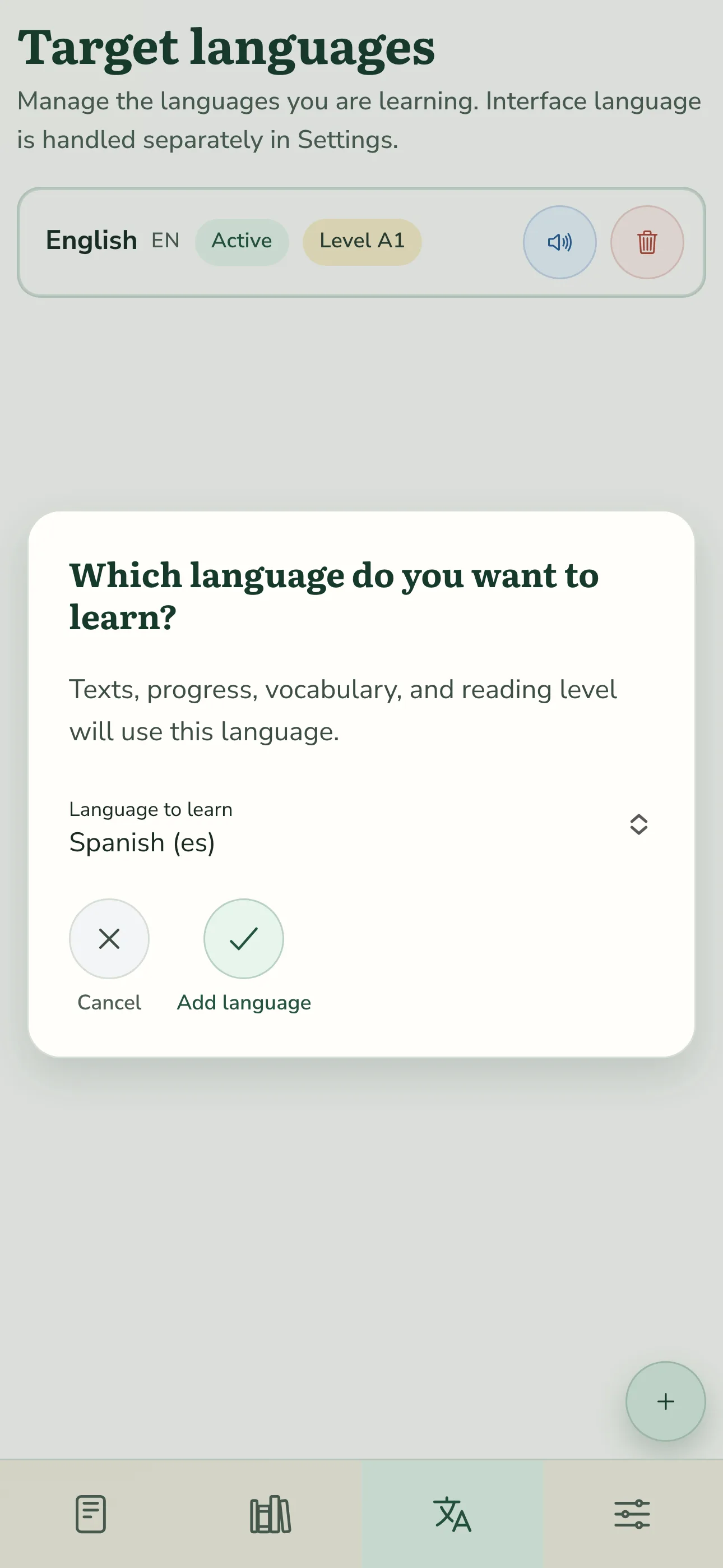
Choose the language you want to read in, then keep the first session easy enough to finish.
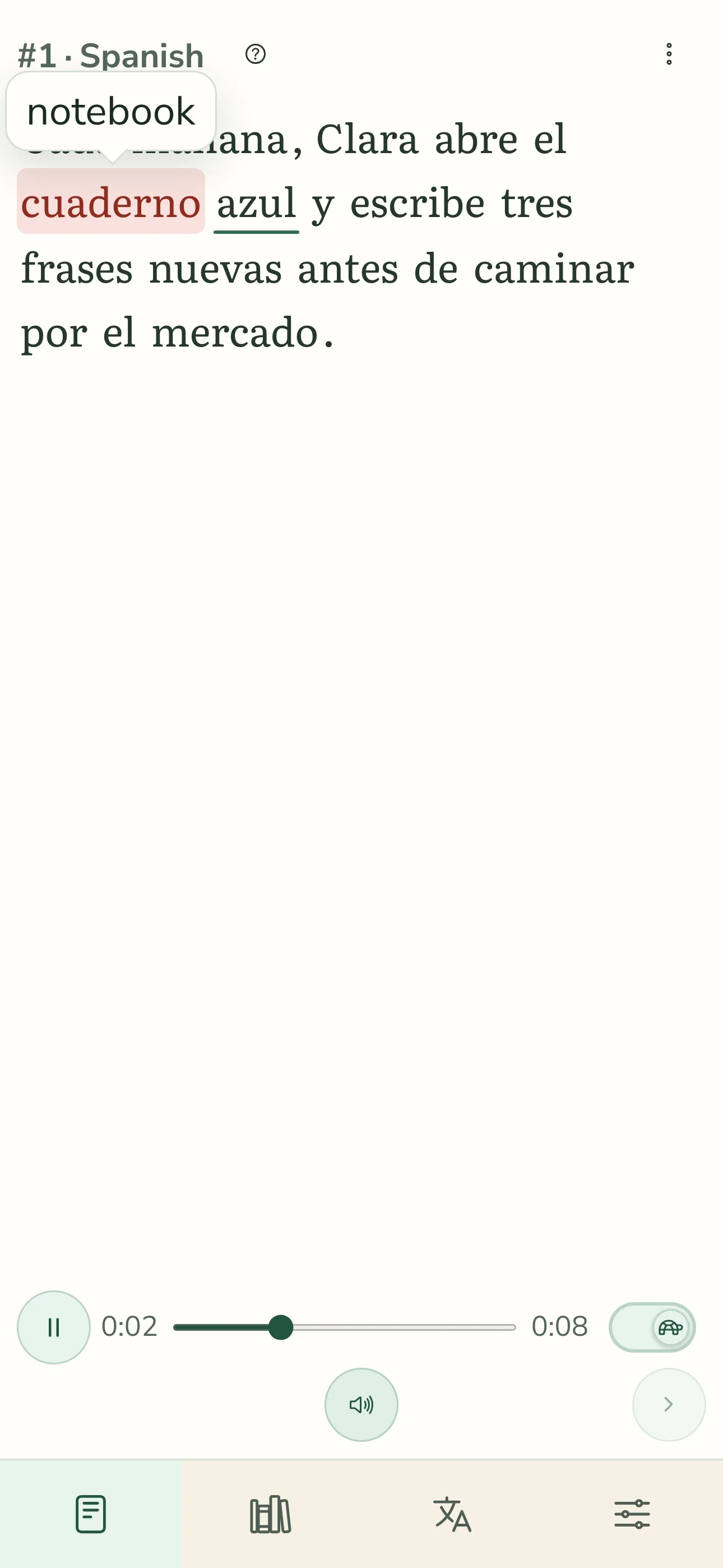
Tap a blocking word without leaving the mobile Reader.
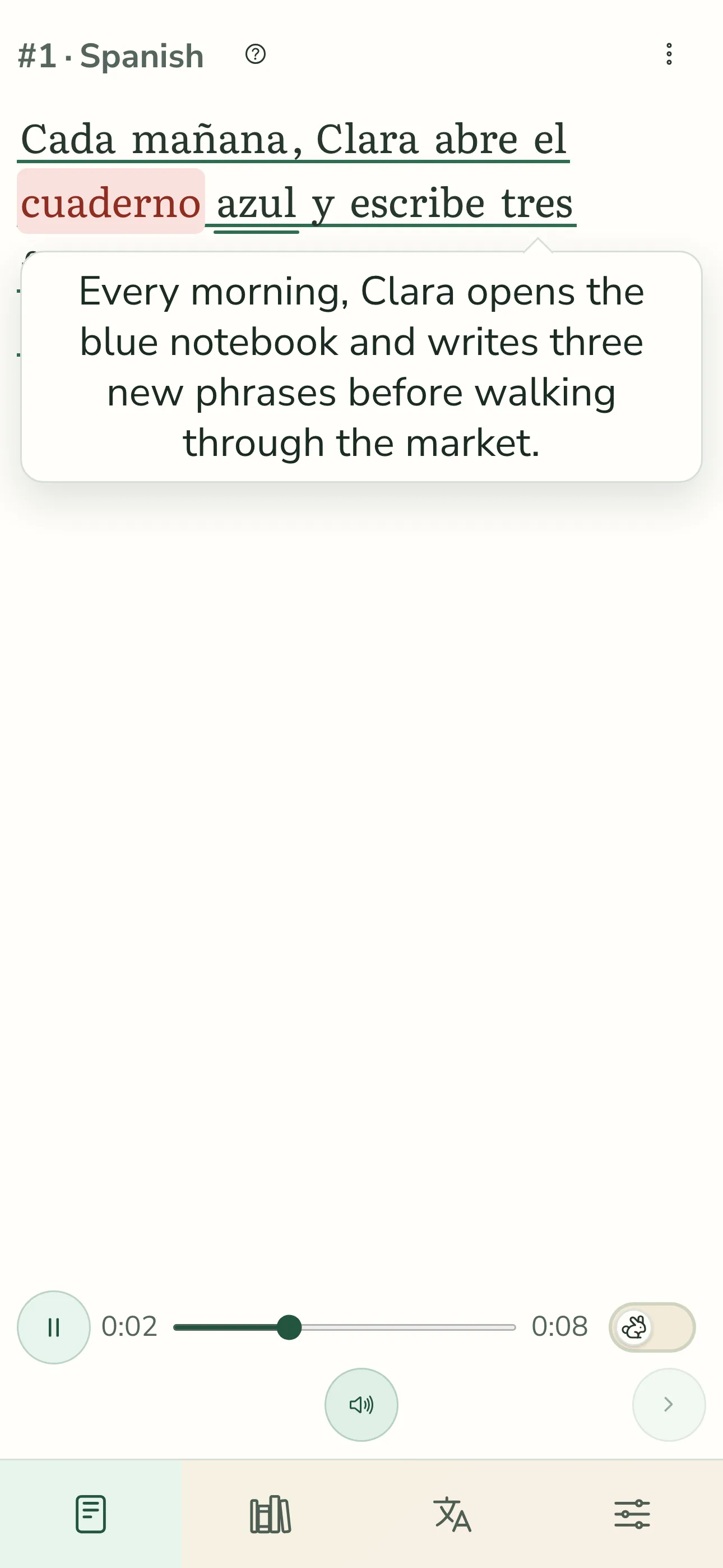
Use sentence support and audio when you need another pass through the same text.
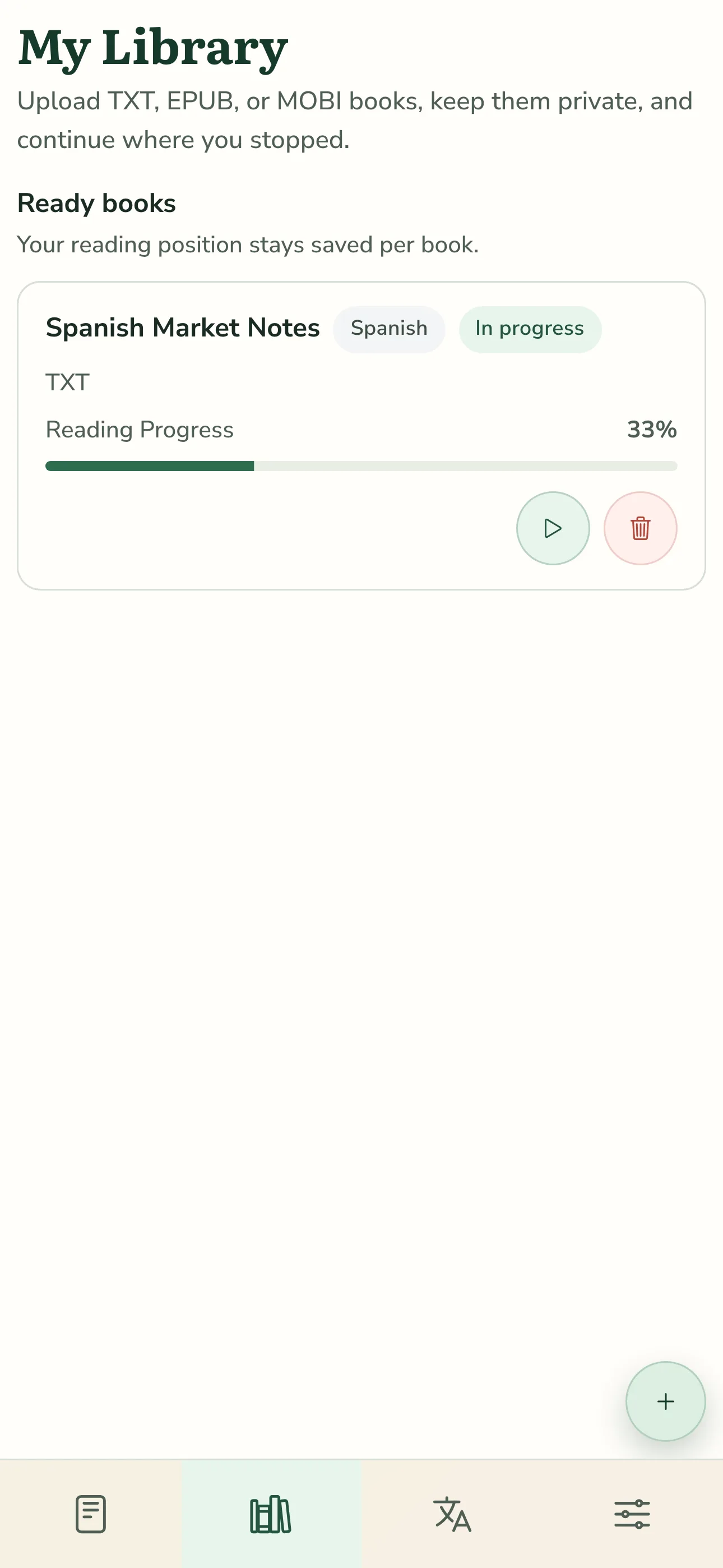
Return to the library to continue a saved book or session.
If you are unsure when to slow audio down and when to return to the original, use the separate guide to slow audio in language learning.
Troubleshooting
| Problem | What to do |
|---|---|
| The text is too hard | Move easier; the best reading practice is mostly understandable. |
| The text is too easy | Finish it quickly, then move slightly harder. Easy reading still builds fluency. |
| You keep translating | Read the paragraph once before checking words, then use read English without translating every word for the full routine. |
| You forget marked words | Keep sessions short and let later reading bring important words back in context. |
How often to use it
A good minimum is one short session most days. Five minutes will not make anyone fluent by itself, but it can protect the habit and create repeated contact with the language. Add longer reading when you have energy. Add listening or speaking when those skills matter.
Next steps
Use how long language learning takes to set expectations and how much reading you need for B1 to plan reading volume. When you are ready, Open TortoLingua.
Reading-first proof guides
Use these proof guides when you need a more precise answer than the hub can give:
- 95% vs 98% known-word coverage explains how to judge text difficulty.
- reading-only by skill shows what reading can train and what needs extra practice.
- graded readers to native books gives a safer transition path.
- vocabulary in context explains how words grow through repeated reading.
Choose the next text
When you understand the method but are unsure what to read next, use the reading level checklist to test one page and decide whether to keep reading, study a short passage, or move easier.
Plan your weekly reading
After choosing a suitable text, use the reading volume planner to turn that choice into a weekly target and adjust it after two weeks.
Choose a graded reader
When you want a concrete book, use the graded reader finder to compare level, language, audio, genre, and legal source before adding it to your reading plan.
Language-specific reading guides
If you already know which language you are studying, use these language-specific reading plans:
- English through reading
- Spanish through reading
- Portuguese through reading
- French through reading
- German through reading
- Serbian through reading
- Ukrainian through reading
- Polish through reading
- learn Japanese through reading
Choose your next reading path
Continue with the route that matches what you want to read next.
Start here
Choose your platform and start the next reading session.
Open TortoLingua in the browser, install it on mobile, or use the reading-practice page if you want the product path before you begin.


