Japanese reading
Japanese Reading Practice App for Beginners and JLPT N5
Practice beginner Japanese reading with short texts, furigana-friendly support, audio support, and a calmer path toward JLPT N5 reading.
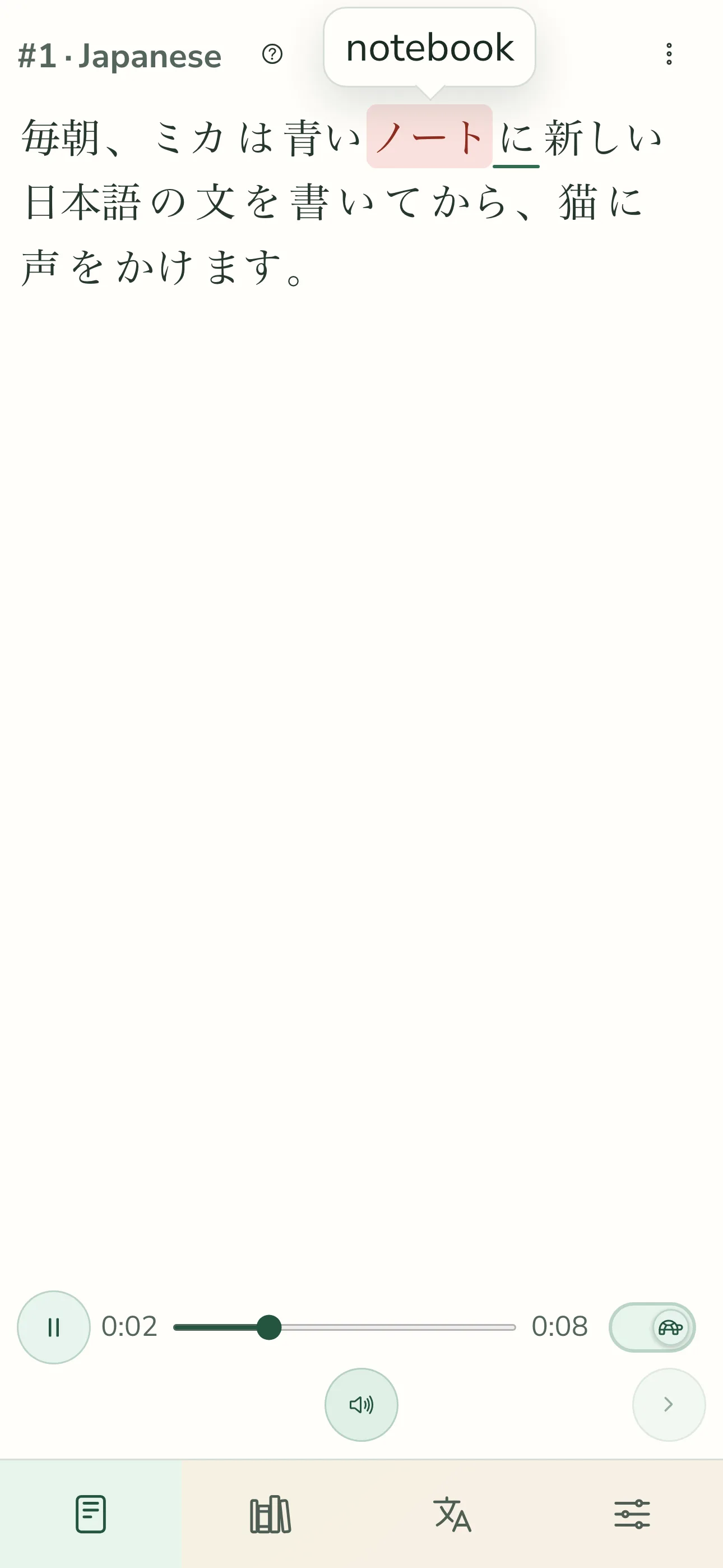
Build Japanese reading before test drills
Beginner Japanese reading is hard because several loads arrive at once: kana speed, basic kanji, particles, word boundaries, grammar, and the pressure to understand quickly. TortoLingua helps by keeping practice short and meaning-focused before you move into heavier test drills.
Use it for daily Japanese reading practice when full mock-test passages still feel too dense. Read one short text, check the words that block comprehension, listen when audio helps, and repeat with a text that stays close to your current level.
A practical JLPT N5 routine
For JLPT N5, use TortoLingua as the reading-volume layer, then add test questions separately:
| Step | What to do | Why it helps |
|---|---|---|
| Read first | Finish a short beginner text without a timer. | You train comprehension before test format. |
| Notice blockers | Check words or particles that stop the sentence. | You avoid saving every unknown detail. |
| Reread lightly | Use audio or a second pass when useful. | Repetition makes simple patterns faster. |
| Add drills | Use N5-style questions after the passage is understandable. | The test becomes a check, not the whole method. |
If kana still feels slow, spend time with hiragana and katakana reading practice first. If you need test-specific framing, use the full JLPT N5 reading practice guide.
What good practice feels like
A useful beginner text should feel partly familiar, not effortless. You should understand the scene or message, meet a few useful unknown words, and still want to read the next short text. If every line needs decoding, move easier and protect the habit.
For more routes through Japanese reading, continue with learn Japanese through reading, Japanese reading with audio, and Japanese graded readers.